Arc Flash Protection 101 for Utilities & Engineers
When an arc flash event happens, ordinary PPE isn’t enough. Electric arc protection gear is specially designed to protect the wearer against intense thermal energy, minimising personal injury risk and operational downtime.
- Deep burns
- Lung damage
- Hearing damage
- Permanent eye damage
Security risks
If a team member throws an old uniform garment away and another person finds it, your business could be at risk of identity theft and unauthorised access. A criminal may pose as an employee, committing fraud and potentially causing harm to customers. Similarly, somebody wearing a uniform fraudulently may be able to access staff-only areas, which could ultimately lead to reputational damage and potential financial losses.
What is arc flash protective clothing?
Arc protection gear is specifically designed to protect against the extremes of thermal energy. Unlike other flame-resistant gear, arc flash protection garments are assigned a specific rating that indicates the level of protection against second-degree burns:
- ATPV (Arc Thermal Performance Value): 50% chance of burns
- ELIM (Incident Energy Limit): 0% chance of burns
- EBT (Energy Breakopen Threshold): fabric fails under stress
Remember: not all flame-resistant fabrics are arc-rated, but all arc flash protection clothing is flame-resistant.
Which industries are most at risk?
Anywhere electricity is generated, distributed or used, can suffer an arc flash event. Protective clothing should always have the correct arc rating and be layered when required to provide additional protection.
Key industries affected by arc flash include rail and transport, engineering, and utilities and power generation.
What PPE is required for arc flash protection?
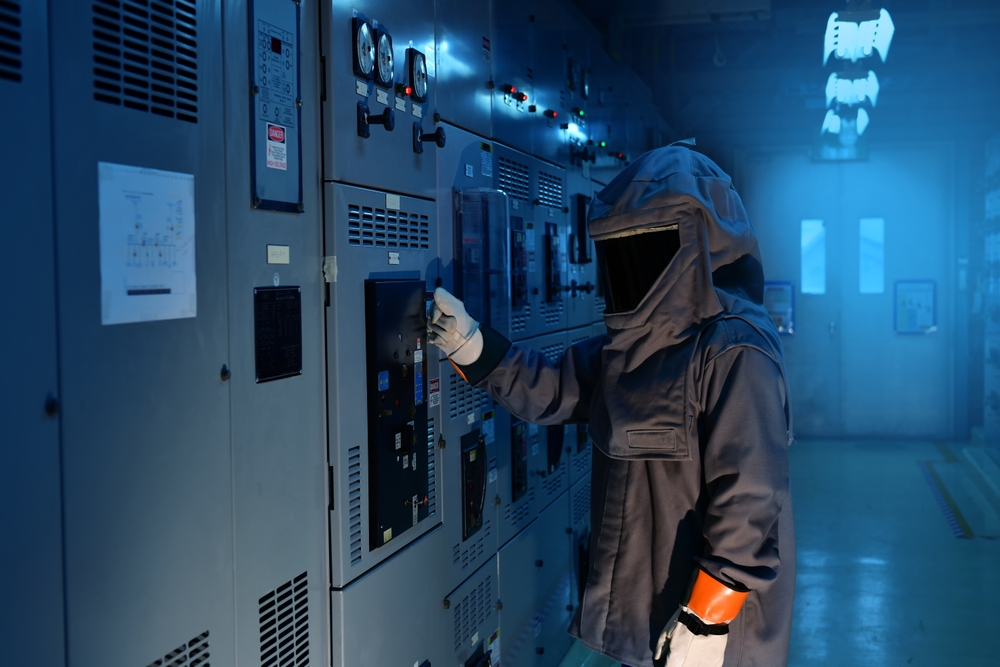
Arc flash protective clothing typically comprises:
- Shirts
- Trousers
- Boiler suits or coveralls
- Full-body suits
- Jackets and hoods
- Face masks
- Gloves
To make selecting the correct level of arc flash protection clothing easier, hazards are categorised by level of risk:
Cat 1
Includes low-risk tasks such as working with control panels. Clothing should have a minimum rating of 4 cal/cm2
- Required clothing and protection: Long-sleeved shirt or jacket and trousers or coverall. Face shield or hood.
- Additional PPE: hard hat, eye protection, ear protection, heavy-duty leather shoes and gloves.
Cat 2
Tasks requiring a single layer of protection. Clothing should have a minimum rating of 8 cal/cm2 and is often used instead of cat 1 gear for enhanced comfort and safety.
- Required clothing and protection: As for Cat 1, but rated 8 cal/cm2.
- Additional PPE: As for Cat 1.
Cat 3
Designed to prevent second-degree burns and provide a high level of visibility. Clothing requires additional layers and has a minimum rating of 25 cal/cm2.
- Required clothing and protection: Full-body coveralls or jacket and trousers, flash suit hood, rubber insulating gloves or arc-rated gloves.
- Additional PPE: Hard hat, eye protection, ear protection, leather footwear.
Cat 4
Required for working with high-voltage transformers and other charged systems. Clothing must meet a minimum rating of 40 cal/cm2.
- Required clothing and protection: Arc-rated coveralls for full-body protection, a hood with a visor, and rubber insulating gloves or arc-rated gloves.
- Additional PPE: Hard hat, eye protection, ear protection (inserts), leather footwear.
Depending on environmental conditions, rainwear, parkas and hard hat liners may also be required.
What are the compliance obligations for arc protection gear?
An employer's legal duty to provide adequate arc flash protection clothing is outlined in the Electricity at Work Regulations 1989. Arc protection gear must meet recognised standards, including EN IEC 61482 and BS EN 50110-1:2023.
In addition, an employer must:
- Ensure protective clothing matches the correct hazard category in your risk assessment.
- Train staff to use arc protection gear correctly.
- Keep risk assessments and protective clothing up to date.
- Provide inclusive sizing.
How long does arc flash clothing last?
Arc flash protection clothing can last 3-5 years. However, several key factors affect the lifespan of arc-rated clothing, including fabric type and general wear and tear.
Arc protection gear should be replaced immediately if it shows signs of physical damage or has been contaminated by flammable substances. If a garment no longer fits or has been involved in an arc flash event, it should be replaced immediately.
How should arc flash clothing be washed and maintained?
Proper maintenance of arc protection clothing is essential. Make sure garments are inspected frequently and repairs are carried out promptly.
Clothing should be kept scrupulously clean to remove dangerous contaminants and preserve its hi-vis qualities.
Always pay attention to the washing care instructions, and never use substances like bleach or fabric softener that can compromise fire safety.
At phs Besafe, we provide a bespoke workwear laundry service to ensure your teams have access to arc protection clothing whenever they need it. To find out more, read our NPg Group arc flash protection case study.
Trust phs Besafe for arc flash protection gear
Our range of flame retardant workwear is here to meet your electric arc protection needs. Explore our PPE and contact us for more information.